

If you have a child who receives services through California's Regional Center system, there's a good chance you've heard the term "Self-Determination Program" — or SDP. Maybe your service coordinator mentioned it in passing. Maybe another parent brought it up at a school meeting. Or maybe you've been searching online, trying to figure out if it's something that could actually help your family.
Here's what we know from working with East Bay families every day: a lot of families who would benefit most from SDP have never had it fully explained to them. Not in plain language. Not in a way that makes the steps feel manageable.
That's what this post is for. We're going to walk you through what the Self-Determination Program actually is, who qualifies, how the funding works, what services it can cover — including ABA therapy — and how to take the first steps if you're ready to explore it for your family.
Quick note: Social Potential LLC(SoPo) is an enrolled ABA provider that works directly with Regional Center of the East Bay (RCEB) and accepts SDP funding. We've written this guide to be useful to any family in California — not just ours. If you have questions about how SoPo fits into your SDP plan, we're always happy to talk. No commitment required.
The Self-Determination Program is a voluntary, alternative way of receiving services through California's Regional Center system. It was signed into law in 2013 under SB 468 and is authorized under California Welfare and Institutions Code Section 4685.8. As of July 1, 2021, it is open to all eligible Regional Center consumers — no lottery, no waitlist to enter the program itself.
Here's the core idea: instead of your Regional Center coordinating services and selecting vendors on your behalf, SDP gives you a personalized budget and the authority to decide how it's spent. You choose your providers. You choose your services. You choose a schedule that works for your family's life — not just whatever happens to be available in the system.
The program is built around four core values: freedom to make your own choices, authority over your budget and service decisions, support from the providers you select, and responsibility for using your funding wisely. These aren't just policy language — they represent a fundamentally different relationship between families and the state's service system.
For families who have felt like passive recipients of services — waiting months for authorizations or losing a great provider because they weren't in the right vendor pool — SDP can feel like a significant shift.
To participate in SDP, an individual must meet all of the following criteria:
If you are already receiving Regional Center services and your child has a diagnosis of autism, there is a strong chance they may qualify. The best first step is a simple conversation with your Regional Center service coordinator.
New to the Regional Center system? Families in the process of establishing Regional Center services can ask about SDP eligibility as part of their initial intake planning. Early Start (services for children under age 3) has different eligibility rules — contact your service coordinator to learn more.
One of the most common questions families have about SDP is: how much money will we actually get?
Your Individual Budget is determined by your Regional Center service coordinator through the Individual Program Plan (IPP) process. The starting point is typically your child's last 12 months of Regional Center service expenditures, adjusted for any changes in your family's circumstances or unmet needs. As of July 2025, families can also request budget adjustments mid-year if their child's needs or circumstances change.
Once your budget is established, it is held and managed by a Financial Management Services (FMS) provider — a certified agency that handles the administrative side of payments. Your FMS provider processes payments to your service providers, manages payroll taxes if you hire workers directly, and helps you track spending throughout the year. You choose your FMS provider from a list of enrolled options your Regional Center can share with you.
You are responsible for managing services within your Individual Budget. SDP funds should be used only for services included in your approved spending plan, and only when other resources — like private insurance — are not available to cover the cost first.
An Independent Facilitator (IF) is a trained professional who can help you navigate the SDP process — building your spending plan, identifying needs, and locating services. Working with an IF is optional, not required. If you choose to work with one during your transition into SDP, those pre-enrollment costs are covered by the Regional Center.
SDP funding can cover a wide range of services and supports, as long as they are included in your approved spending plan and aligned with the goals in your child's IPP. For families of children with autism, this commonly includes:
Assessment, treatment planning, and direct therapy sessions with a BCBA.
Communication, language development, and social communication support.
Fine motor skills, sensory processing, and daily living skills.
Short-term relief and caregiver support to help sustain the whole family.
Support for participating in community activities and social settings.
Devices and tools that support communication, learning, and independence.
This is not an exhaustive list. Your spending plan can include any service tied to your child's IPP goals, not duplicated by another funding source, and within your Individual Budget. Your service coordinator and FMS provider can help clarify what is allowable for your child's specific plan.
Here's how our model aligns with what SDP was designed to do.
At SoPo, every session is led directly by a Board Certified Behavior Analyst. In many multi-tier agencies, a significant portion of funded hours go toward entry-level technicians. With SoPo, every SDP hour you fund is BCBA-level clinical care from start to finish.
SoPo's caregiver-led model means you're never a bystander in your child's therapy. We actively coach and support you during every session so you can carry strategies into daily life — mealtimes, bedtime, community outings, and everything in between. Your child's progress doesn't stop when we log off.
SDP's emphasis on person-centered planning is a natural match for how SoPo operates. We don't use cookie-cutter treatment plans. Every intervention begins with understanding your child, your family's priorities, and what meaningful progress actually looks like in your everyday life.
Navigating SDP as a multilingual family involves real challenges — from understanding program language to communicating with your service coordinator and FMS provider. SoPo's owner and lead BCBA, Tiffany Nguyen, is multilingual and brings deep cultural understanding to every family. We can also help connect families with FMS providers in the East Bay.
SoPo is an enrolled RCEB vendor and actively accepts SDP funding. We are currently accepting new clients. Once your spending plan is approved and your FMS account is active, we can begin the intake and initial assessment process right away.
The process has several steps, but you don't have to navigate them alone. Here's how it typically unfolds:
Let them know you're interested in learning more about SDP. They can answer initial questions and help you register for an orientation.
Orientations are offered through the State Council on Developmental Disabilities (SCDD) via live Zoom, as well as through some local Regional Centers. You can find the current schedule at scdd.ca.gov. Make sure you sign up for an official orientation — not just an info session — as this is the step that formally qualifies you to enroll.
Work with your service coordinator (and an Independent Facilitator if you choose one) to develop a person-centered plan focused on your child's goals, strengths, and what matters most to your family.
Your RC determines your Individual Budget, and you'll select a Financial Management Services provider to hold and administer your funds throughout the year.
Map out how your funding will be used across services. This is where you choose your providers — and where SoPo comes in. We're happy to provide documentation about our services to support your authorization and spending plan process.
Once your spending plan is approved and your FMS account is active, services can begin. If you've selected SoPo as your ABA provider, we'll start the intake and initial assessment process right away.
The Self-Determination Program isn't perfect — like any system, it involves paperwork, timelines, and a learning curve. But for families who want more say in who supports their child, how those services are delivered, and whether their providers truly understand their family's language and culture, it can be genuinely transformative.
If you're curious whether SDP might be the right path for your family — or if you're already in SDP and looking for an ABA provider who gets it — we'd love to connect.
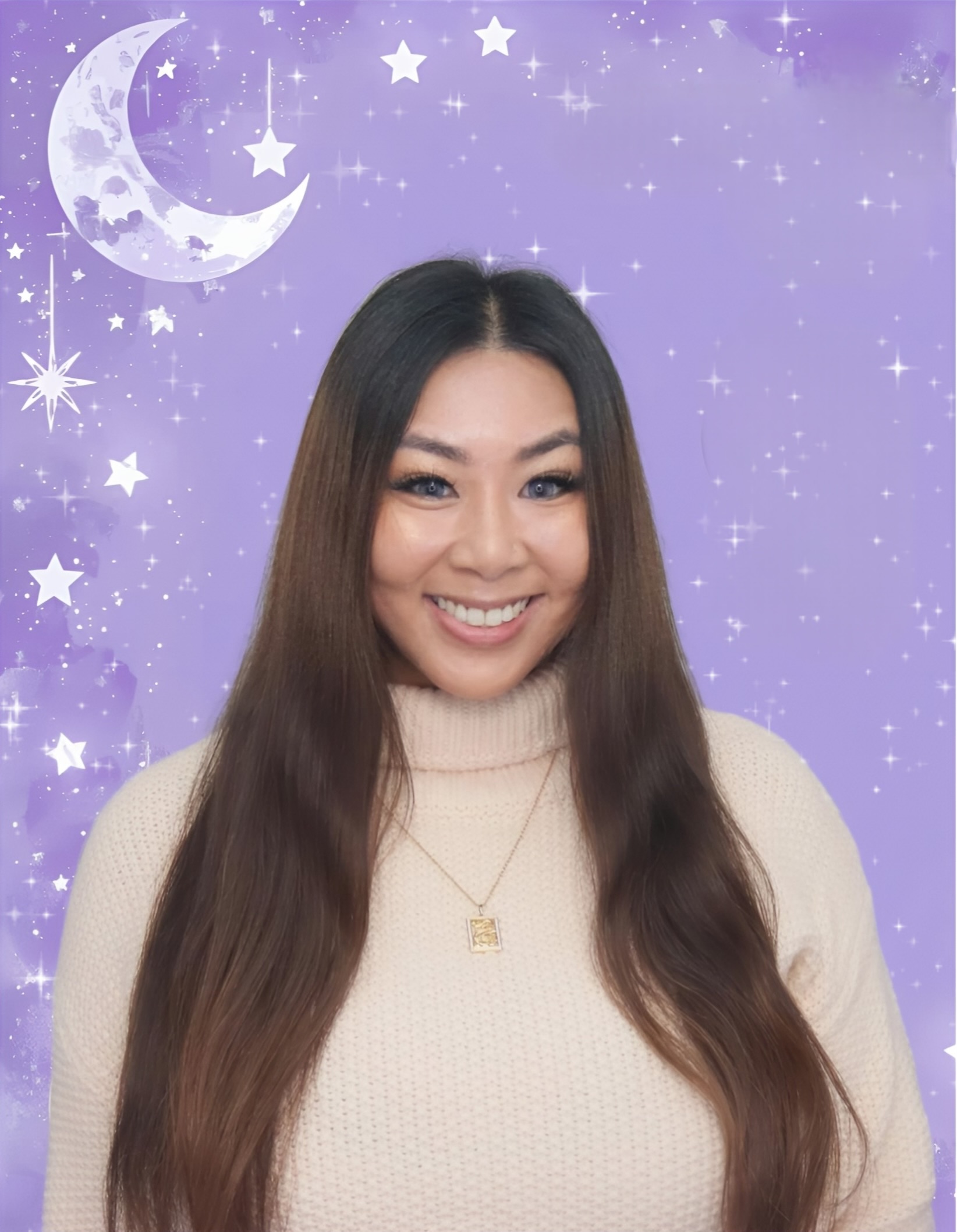
Tiffany is the Owner and Lead BCBA of Social Potential LLC (SoPo), serving families across Alameda County including San Leandro, San Lorenzo, Hayward, Castro Valley, and Union City. With over a decade in the ABA field and a deep commitment to culturally responsive, caregiver-led care, Tiffany built SoPo around the belief that families deserve to feel empowered, not sidelined. She is multilingual in English, Cantonese, and Vietnamese.
Schedule a free consultation with Tiffany to ask questions, share your child's story, and find out whether SoPo is the right fit for your family. Completely free, completely no pressure.
Book a Free Consultation
Serving San Leandro, San Lorenzo, Hayward, Castro Valley, Union City, and surrounding East Bay areas.
Available in English, Cantonese, and Vietnamese.