
The skill your child learns in therapyisn't theirs yet.
There's a reason progress disappears the moment you get home, and something you can do about it, starting tonight, in the moments you're already living.
Free preview delivered instantly. No spam, ever. Just the chapter and a few notes from the author.
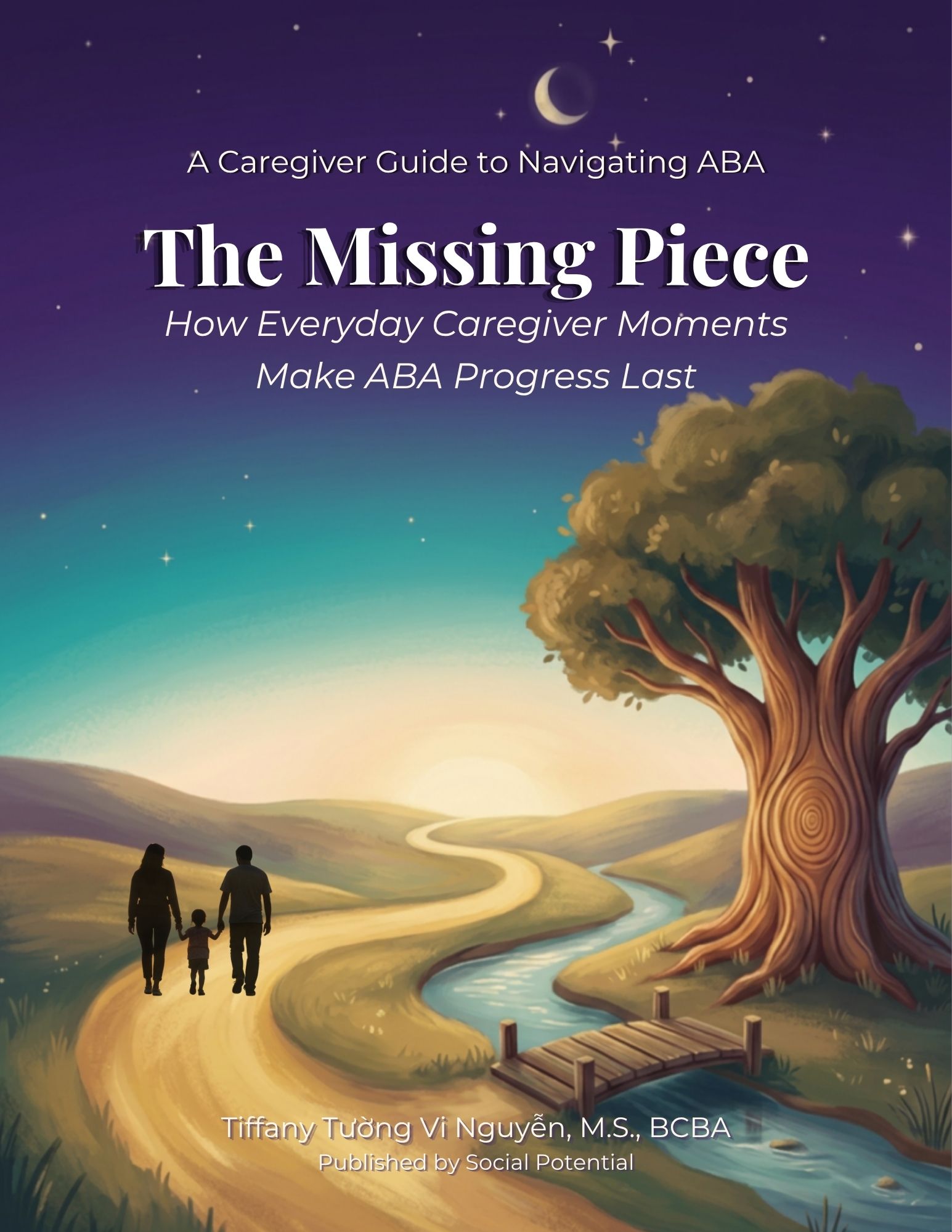
You've felt this moment more times than you can count.
Your child does something beautifully in session. You feel a flicker of hope. Then the therapist leaves, the week happens, and by the weekend it's like it never existed. That's not your fault, and it isn't your child's either.
They can do it with the therapist. So why does it fall apart the second we're home?
I love their team. But I still feel like a spectator in my own child's progress.
Nobody handed me a guide. I'm just guessing, hoping I'm helping and not making it worse.
You were never the missing piece because you were doing something wrong. You were missing because no one ever showed you the part that was always yours to play.
A skill learned in therapy is not yet a skill a child owns.
New skills become real when they're practiced across the ordinary moments of a real life: breakfast, bath time, the grocery store. And the person present for those moments isn't the therapist. It's you.
A clear path through the parts that feel hardest.
Sixteen chapters across four parts, written in plain language, grounded in research, and built for real family life. No clinical background required.
Why progress slips
The science of generalization, in language that finally makes sense.
Communication
Helping skills travel across people, places, and settings.
Predictable routines
Building the structure that makes everything else possible.
Sensory needs
Reading what a body is asking for, and responding with care.
Emotional regulation
Regulation first. Learning second. Always in that order.
Smoother transitions
Paths through the moments that tend to fall apart fastest.
Partnering with your team
What to ask, what to expect, and how to be heard.
What good ABA looks like
How to recognize ethical, affirming, individualized care.
For your whole team
Shared language for SLPs, OTs, teachers, and family.
Parents and caregivers new to ABA or on a waitlist · families years into services · grandparents and siblings · BCBAs and RBTs who want stronger caregiver carryover · SLPs, OTs, and teachers aligning across settings · and anyone who has ever thought, "I wish I knew what to do."
Get the Introduction and Chapter One, on the house.
The same opening every reader starts with, yours to keep, instantly.
- The grocery-store moment that reframes what therapy is really for
- What "generalization" means, and why it changes everything
- What good, affirming ABA actually looks like in practice
Launch week pricing is live.
Full price begins August 12.
The book is live now at the launch-week price. Price increases one more time on August 12. Get your copy while it's discounted.
Requires the free Kindle app

You are the missing piece.You always were.
Start with the first chapter tonight. It's free, it's yours, and it might be the moment everything starts to change.